01
Drawing review
We read for castability, not just price: draft angles, section changes, cored passages, machining allowance and where porosity would show up after machining.
Steering-gear housings, motor end covers, reducer bodies, valve and pump bodies, counterweights. Pouring and machining sit under one ownership, so a bore that runs out is our problem to solve — not something to argue about between two suppliers.
| Grey iron | HT200 / HT250 (Class 30 / 35) |
| Ductile iron | QT450-10, QT500-7, QT600-3 |
| Melting | Medium-frequency induction furnace |
| Control | Spectrum analysis per heat, inoculation recorded |
| Moulding | Green sand, DISA automatic line |
| Cores | Shell cores for internal passages |
| Weight range | Quoted per drawing |
Other grades quoted on request. Heat number is recorded and travels with the shipment.
| Equipment | 65 machining units in a separate plant |
| Operations | Turning · milling · drilling · grinding · CNC |
| Bore position | ±0.005 mm, confirmed on CMM |
| Fixtures | Built per part number, kept for repeat orders |
| Incoming work | Customer-supplied castings accepted |
| Assembly | Cast + machined + assembled + packed |
| Reports | Full-dimension first article, material certificate |
Heat treatment, aluminium die casting and mould making are outside our floor — we say so before you send the RFQ.
A sample of running part families, shown to indicate the geometry we handle — cored passages, thin fins, machined bosses, sealing faces. It is not a catalogue; most of what we make was drawn by the customer.
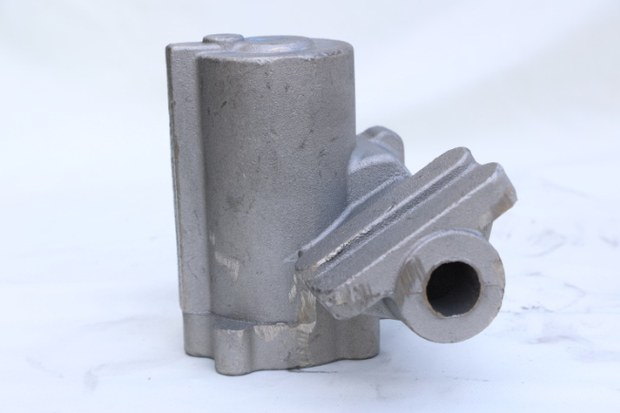
Ribbed body, inclined boss, cored internal cavity. Machined mounting face and bore.
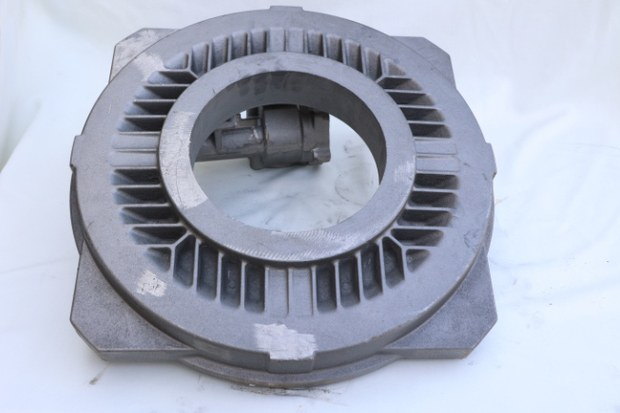
Radial cooling fins, thin section, central bore for the shaft. Typical motor or reducer cover.
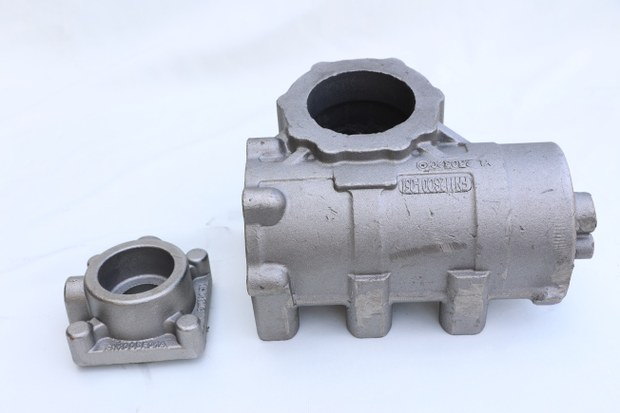
Flanged bodies in two sizes, pressure class cast into the wall. Sealing faces machined.
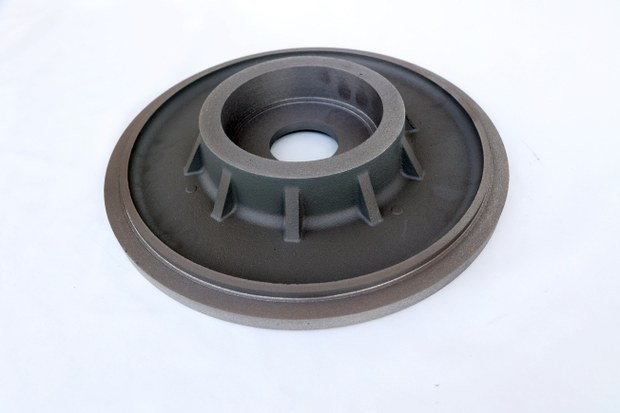
Turned hub, ribbed back, concentric mounting face. Balanced by geometry rather than added weight.
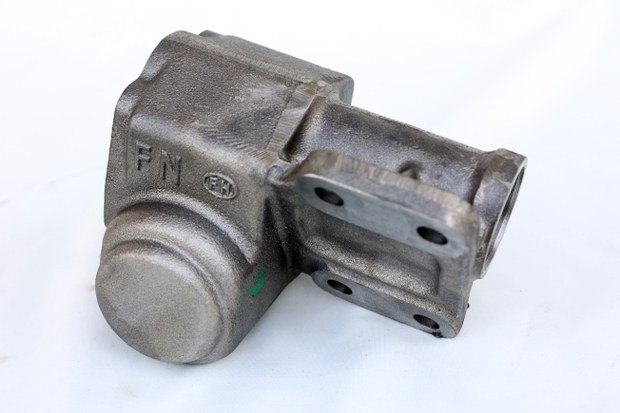
Right-angle flow path, two machined flanges, cast grade marking retained on the wall.
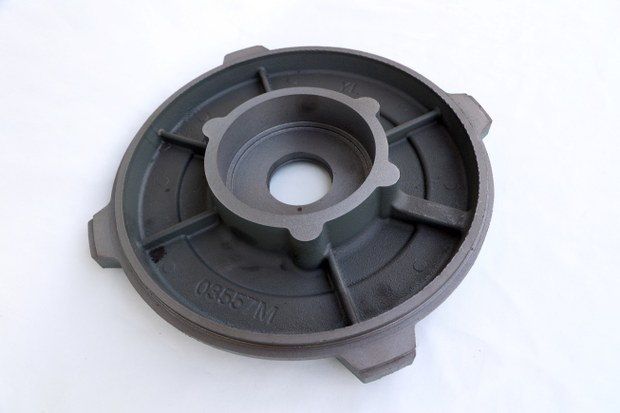
Deep-drawn profile in cast iron, internal ribs, machined spigot and bolt circle.
Photographs of running parts, used with customer consent. Part names are indicative of the family, not a product list.
Six steps from enquiry to first delivery. Steps 1 to 3 usually take under a week when the drawing is complete — the queue is in tooling and first-article approval, not in quoting.
We read for castability, not just price: draft angles, section changes, cored passages, machining allowance and where porosity would show up after machining.
Proposed route, gate and riser concept, weight estimate, material grade and the points we would change. Sent back before any price.
Priced per part number, with tooling, sample and piece price separated. No coating or packing cost buried inside the unit price.
Pattern and core box made, sample cast, dimensionally checked and sent for your approval before volume is released.
Full-dimension report and CMM print on the critical features, plus material certificate and heat records. Signed off, then volume.
Records kept per heat. Repeat orders reuse the same pattern, fixture and inspection plan, so the second batch matches the first.
A PDF drawing with critical dimensions and tolerances is enough to start. Tell us the grade, the annual quantity and where the part ships.